


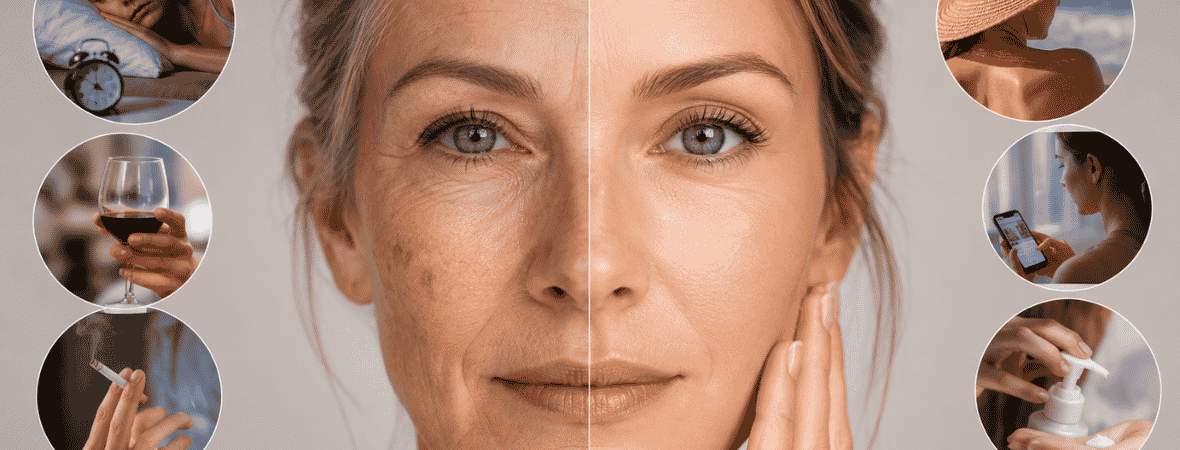
Why this matters
Most of the face aging people notice is not “just getting older.” It is photoaging: visible aging driven by repeated UV exposure, which can account for the majority of visible skin aging on sun-exposed areas. Skin also naturally gets thinner, drier, and less elastic with age, so everyday habits can either slow that down or make it show faster.
In a coastal market like Victoria and Sidney, the problem is that people often get a lot of incidental sun without thinking about it: on the way to work, walking by the water, sitting near windows, driving, or doing outdoor errands. That is exactly why the little habits below matter so much.
1) Skipping sunscreen on ordinary days
This is the biggest one. UV exposure is still the number-one driver of photoaging, and dermatology groups recommend a broad-spectrum SPF 30 or higher every day, not just at the beach. UVA also passes through window glass, so “I was indoors most of the day” is not a real pass.
What this looks like in real life: someone uses sunscreen only on sunny weekends, then wonders why they have uneven pigment, early forehead lines, and sun spots by their late 30s. The face, neck, hands, and chest are the areas that show that damage first because they are exposed again and again.
What to do instead: use SPF 30+ every morning, broad-spectrum, and make sure you cover the face, neck, ears, chest, and the backs of the hands. If you are near windows or outside for long stretches, reapply.
2) Thinking tanning beds or “a little tan” are harmless
They are not. UV from tanning beds is considered a known carcinogen, and artificial UV still drives premature skin aging. If you want skin that looks younger for longer, tanning is one of the fastest ways to sabotage it.
A real-world pattern I see is this: someone spends years chasing a “healthy glow,” then ends up with patchy pigment, rough texture, and fine lines that look deeper in natural light. That damage is often much harder to fix than the original tan was to get.

What to do instead: use tinted sunscreen, self-tanner if you want colour, and get any visible sun damage assessed early. The earlier you treat pigment and texture, the easier it is to improve them.
3) Smoking or vaping nicotine
Smoking is one of the clearest habit-level causes of looking older, because it reduces blood flow to the skin and contributes to wrinkles. Medical references also note that the more cigarettes someone smokes and the longer they smoke, the more wrinkling tends to increase.
The pattern is easy to spot in clinic: deeper lines around the mouth, duller skin tone, and a more tired-looking complexion. The exact same person often looks brighter within weeks of quitting simply because circulation and skin recovery improve.
What to do instead: stop the nicotine habit completely if you can, or at least address it honestly as part of your skin plan. No facial can fully outwork ongoing smoke exposure.
4) Sleeping face-down or always on the same side
Sleep lines are real. Repeated pressure and compression from the pillow can contribute to creases over time, especially when the skin loses elasticity with age. Back sleeping is the least compressive option; side and stomach sleeping create more friction and pressure on the face.
A common example is the person who wakes up every morning with a crease on the same cheek or along the same nasolabial area, then notices that the line stops bouncing back as fast as it used to. That is not just “bad sleep posture”, it is mechanical aging.
What to do instead: sleep on your back when possible, use smoother pillowcases, and pay attention to whether one side of your face is being crushed every night. If you cannot change your position fully, at least reduce friction.
.png)
5) Overwashing, long hot showers, and harsh cleansers
Dry skin reads as older skin because it looks rough, tight, flaky, and less plump. Dermatology guidance specifically warns that long hot showers, deodorant soaps, and harsh cleaning products strip oils and fats from the skin and worsen dryness.
This is a big one in winter, but it matters year-round. Someone can be using expensive serums and still look tired if they are constantly stripping the skin barrier at the sink or in the shower. Dry skin also becomes more prone to cracking, irritation, and even infection.
What to do instead: keep showers short and warm, use a gentle cleanser, and switch from lotion to cream or ointment if the skin is getting tight. That alone can make skin look more rested within days to weeks.
6) Over-exfoliating or picking at your skin
A lot of people think “more exfoliation = more glow.” In practice, too much exfoliation damages the barrier, causes redness and peeling, and can make the skin look older fast. Picking at acne or peeling skin also raises the risk of scarring and infection.
A common example is someone using scrubs, acids, and active serums every day, then trying to “fix” the irritation by picking flaking spots. The result is not smooth skin. It is more inflammation, more pigment, and sometimes marks that sit around for months.
What to do instead: exfoliate with a plan, not on impulse. If you are already irritated, step back, repair the barrier, and let the skin calm down before adding more actives.

7) Not moisturizing when your skin is dry
Dry skin does not just feel uncomfortable. It can make fine lines look deeper, make the skin look rougher, and emphasize texture. The AAD notes that moisture loss leads to dehydration, rough texture, itch, and a wrinkled look, especially as skin ages.
This is one of the easiest habits to miss because many people think moisturizer is optional, or they only apply it when they feel “tight.” But by the time the skin feels tight, the barrier is already stressed.
What to do instead: use a moisturizer that actually matches your skin type, and do it consistently. If your skin is dry, cream or ointment usually works better than lotion. If your skin is acne-prone, the right moisturizer still matters because dry skin can trigger more oil production and more breakouts.
8) Living in chronic stress and poor sleep
Stress is not just a mood issue. Chronic stress has physical effects, and dermatology sources link stress to changes in skin and hair. Poor sleep is also associated with less restorative repair, which is exactly when skin tries to recover.
The face usually shows this first as dullness, tired eyes, more visible lines, and a less “full” look to the skin. A person can have decent products and still look older than they should simply because their body is running on stress and poor sleep.
What to do instead: protect sleep like a treatment. Regular sleep, less chaos in the evening, and real recovery time matter more than most people think.
9) Ignoring the neck, chest, and hands
A lot of people only treat the face and then wonder why they still look older. The problem is that the neck, chest, ears, and hands show sun damage and thinning very clearly, and dermatology guidance specifically tells people to apply sunscreen to those areas too.
A very typical example is someone with a nicely cared-for face but sun spots on the hands and chest, plus crepey neck skin that gives away their age immediately. That mismatch makes the whole appearance look older, even if the face itself is in good shape.
What to do instead: treat those areas as part of your face plan. Sunscreen, moisturizer, pigment treatment, and collagen-focused procedures should extend below the chin.
10) Letting acne marks, redness, and sun damage sit untreated
Old acne scars, persistent redness, and sun spots make skin look older because they interrupt even tone and smoothness. Dermatology sources point out that acne can scar when it is picked or squeezed, and photoaging creates the pigment changes and textural roughness that age the face visually.
This is where a lot of people waste years. They wait for marks to “fade on their own,” but a visible spot that has been sitting there for months or years often needs real treatment, not wishful thinking.
What to do instead: get the cause identified early and treat it properly. For many clients, that means a skin consultation, a pigment plan, a facial series, microneedling, chemical peels, or laser-based treatments depending on the concern.
The short version
If you want to look younger without chasing trends, fix the habits that quietly age the face: UV exposure, tanning, nicotine, sleep compression, barrier damage, over-exfoliation, dryness, stress, neglecting the neck/hands/chest, and leaving marks untreated. Those are the habits that actually show up in the mirror.

.jpg)
.png)
